It is something that is quickly forgotten during exercise. You are in the middle of a race, match, or training session. The sun is blazing on a warm day, sweat is dripping from your forehead, and there is a salty taste on your lips. Where is your bottle, actually? Have you even had anything to drink yet? Perhaps even more importantly: what is in your bottle? What is your hydration strategy?
Without enough fluids and electrolytes, your body simply does not function as well. Your mouth gets dry, you gradually become tired, and you can produce less power. Your headache slowly gets worse, and you start to feel nauseous and dizzy. These are all symptoms of not drinking enough during exercise.
Still, many athletes drink too little, or they do not drink at the right time. When should you choose water, when should you choose an isotonic sports drink, and when are electrolytes really necessary? And how much fluid do you actually lose during exercise? In this blog, we take you into the world of hydration, fluids, and electrolytes. Practical, easy to understand, and ready to apply straight away.
Why hydration is so important
When you exercise, your body produces a lot of heat. To get rid of that heat, you start sweating. The sweat on your skin evaporates, which removes heat from your body and helps you cool down. Sweating is an essential mechanism for keeping your body temperature under control. But through sweat, you lose not only fluid, but also electrolytes.
That fluid loss affects your performance. Even at around 2% fluid loss of your body weight, your performance can noticeably decrease. For someone weighing 75 kg, that equals 1.5 L of sweat. That may sound like a lot of sweat, but it happens faster than you might think.
Hydration is not just about drinking. It is about replenishing fluids, electrolytes, and energy, and making sure the fluid is properly absorbed by your body.
Not all drinks hydrate in the same way
What you drink during exercise matters. Not every drink is absorbed at the same speed. This has to do with the concentration of carbohydrates and electrolytes in the drink. You often hear the terms hypotonic, isotonic, and hypertonic. These terms describe the concentration of dissolved substances (carbohydrates and electrolytes) compared to your blood. This determines how easily the fluid is absorbed.
A hypotonic drink contains relatively few dissolved substances. It contains few carbohydrates. Water, for example, is a hypotonic drink. The fluid can be absorbed quickly in your intestines. This makes hypotonic drinks especially suitable when hydration is the priority, for example in warm weather.
An isotonic drink has a concentration similar to your body fluids. It often contains a combination of carbohydrates (6–8%) and electrolytes. It is absorbed relatively quickly and is ideal when you need both fluid and energy during exercise.
A hypertonic drink, on the other hand, contains a lot of carbohydrates. As a result, it takes longer for the drink to be absorbed. Hypertonic drinks are therefore less suitable during exercise, but they can be useful afterwards or when energy is more important than fast hydration.
How much do you actually sweat?
How much you sweat depends on several factors. Think of temperature, exercise intensity, humidity, and your personal characteristics. Training level also plays a role. Well-trained athletes often start sweating earlier and sometimes sweat more, because their body is trying to cool down more efficiently. Within a single training session, you can already lose 1–2 litres of fluid, and you will feel that directly in your performance.
Besides fluid, you also lose electrolytes. Sodium is especially important here, because it occurs in relatively large amounts in sweat. Some athletes lose more sodium than others. You can see this, for example, in athletes who have white salt marks on their clothing after exercise.
Calculating your own sweat loss
Because everyone sweats differently, it can be useful to calculate your own sweat loss. Weigh yourself before and after a training session or race. Then add the amount of fluid you drank. The difference is your sweat loss.
Sweat loss (L) = Weight before exercise (kg) – weight after exercise (kg) + fluid intake (L)
Suppose you weigh 75.0 kg before training and 74.2 kg afterwards. During training, you drank 500 ml. You have then lost 0.8 kg of body weight and consumed 0.5 litres of fluid. In total, you have therefore lost about 1.3 litres of fluid.
With this information, you can adjust your drinking strategy. For example, if you consistently drink less than you lose, there is a good chance that you will slowly become dehydrated during longer efforts.
The role of electrolytes
Electrolytes play an important role in your body’s fluid balance. They help with muscle contractions, nerve signalling, and regulating fluid in and around your cells. Sodium is the most important electrolyte during exercise. Sodium helps your body retain fluid and also stimulates thirst. This helps you keep drinking and allows the fluid you consume to be retained more effectively.
In addition to sodium, potassium and chloride also play a role. Potassium is important for muscle function and fluid balance within the cells, among other things. Magnesium is often mentioned, but during exercise it usually plays a smaller role compared to sodium.
During short efforts, replenishing electrolytes is usually not necessary. But during longer efforts, warm weather, or heavy sweating, adding electrolytes can definitely make a difference.
When and what should you drink?
Many athletes only drink when they become thirsty. During longer efforts, that can be too late. Thirst is not a perfect indicator of hydration during exercise. That is why it is often wise to drink small amounts regularly. A general guideline is around 400 to 800 millilitres per hour, but this strongly depends on your sweat loss and the conditions.
For shorter training sessions, water is often sufficient. As efforts become longer, a sports drink with electrolytes becomes more useful. In addition to fluid, you also take in carbohydrates (energy). In that case, choose an isotonic sports drink that is easily absorbed by the body.
Practical hydration tips
Before exercise:
- Drink 400–600 ml in the 2 hours before training or competition
- Optionally drink another 100–200 ml just before the start
- Light yellow urine = a good indication of hydration
During exercise:
- Guideline: 500–1000 ml per hour
- Drink in small sips
After exercise:
- Drink 1.5x your fluid loss: if you have lost 1 kg, drink 1.5 L
- Spread this over 2–4 hours after exercise
- Combine with carbohydrates and protein for optimal recovery
So, what should you drink?
Water
- Short efforts (<60 min)
- Low intensity
- Cool weather
- Extra electrolytes if you sweat a lot, in warm weather, or during long low-intensity endurance sessions
Isotonic sports drink
- Longer efforts (>60 min)
- Intensive training or competition
- Warm weather/heavy sweating
- Provides fluid + carbohydrates + electrolytes
Conclusion
Hydration is an essential part of sports nutrition. During exercise, you lose fluids and electrolytes, and this can affect your performance. By choosing the right drink, knowing your sweat loss, and drinking regularly, you can help prevent this.
Whether you choose water, an isotonic sports drink, or electrolytes, the most important thing is to have a strategy that suits your sport, the conditions, and your body. That way, you stay better hydrated and get more out of your training and competition.
Recommended products
-

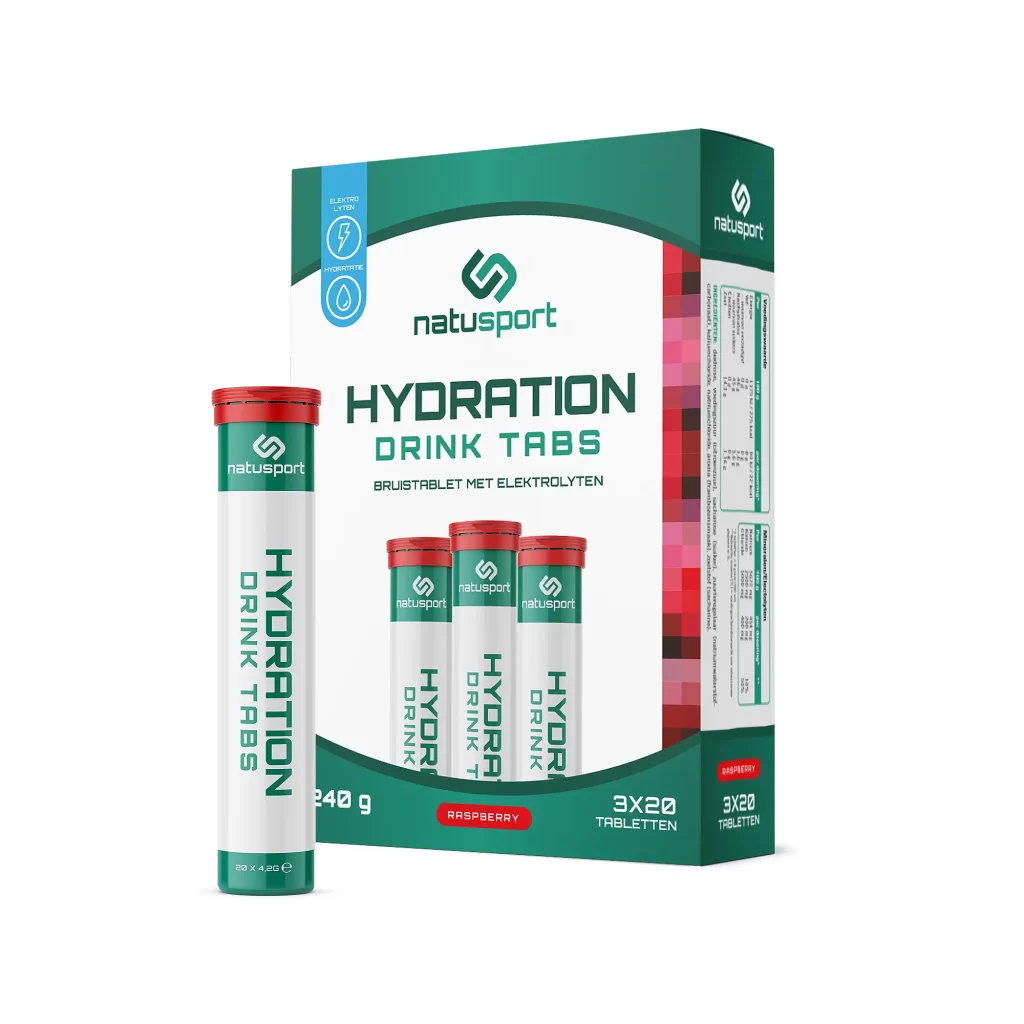
Hydration Drink Tabs – 3 x 20 tabs
€15,95 -
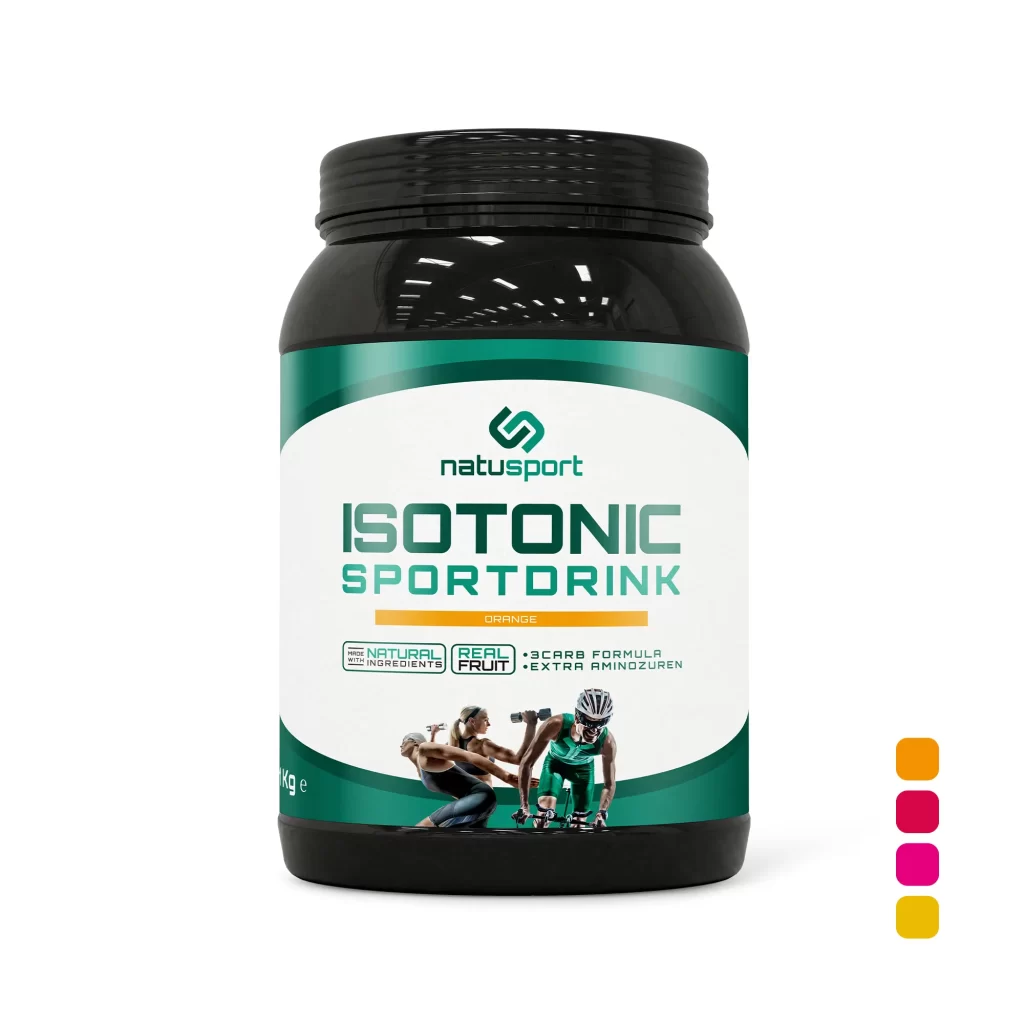
Isotonic Sports Drink
Price range: €11,95 through €98,95